Professional food safety experts located in Brampton ensure restaurants, food distribution facilities, bakeries, warehouses, and food service vehicles to sanitation standards. They treat frequently handled areas, food prep surfaces, equipment, floors, drains, restrooms, and preparation zones using approved sanitizers, in correct dilution, and with verified times.
Main Points
- Food safety cleaning experts from Brampton support restaurants, grocery departments, commissaries, warehouses, bakeries, schools, mobile vendors, and allergen-sensitive operations.
- They disinfect frequently contacted areas, food-contact equipment, kitchens, floors, drains, restrooms, and storage areas using compartmentalized approaches to prevent cross-contamination.
- Checking of approved sanitizer dilution, suitability, and contact time is conducted by trained providers, with finalization filed using swabs, reviews, and corrective-action records.
- Danger, output capacity, switches, releases, and standards ought to direct hygiene plans, with routine, regular, and annual tasks assigned by area.
- Protection, color-categorized tools, HACCP, health regulatory expertise, safety training training, testimonials, and assessment-ready maintenance documentation are important contractor qualifications.
Food Safety Cleaning Requirements for Brampton Venues
Any Brampton facility that handles, maintains, prepares, packages, or offers food needs food sanitation. You must use it if your business falls under health inspection, premises standards, or HACCP protocols. That requirement covers eateries, dining facilities, food distribution centers, supermarket departments, meat markets, fish counters, corner stores, and commercial kitchens.
You'll additionally need proper hygiene protocols in distribution warehouses, production plants, frozen storage areas, commercial bakeries, educational meal programs, banquet venues, and food delivery services. Portable business models apply too, such as catering trucks, festival vendors, and pop-up food booths. If your workers work with ingredients, section ready-to-serve foods, heat meals, or keep allergens stored, your venue requires documented cleaning protocols. In Brampton, food safety stays mandatory; it forms regulatory, business, and safety adherence.
Which Areas Do Brampton Cleaning Experts Cover?
Your operation needs cleaning professionals who sanitize all high-touch areas, kitchens, all floor types, and restrooms to maintain food safety compliance and public health standards. These zones receive attention due to their elevated cross-contamination potential, hazardous walking conditions, and breaches of sanitation codes.
When you know their cleaning scope, you can ensure your operation's cleaning procedures satisfy operational and regulatory requirements.
Essential High-Touch Surface Sanitizing
develop a cleaning frequency
surface sampling to confirm sterilization results
Food Prep Areas, Flooring, and Sanitary Facilities
Professional cleaners in Brampton prioritize kitchens, floors, and restrooms given that each location involves specific contamination control, falling hazards, and public health requirements. In industrial kitchens, you need grease removal from cooking stations, appliance surfaces, drain systems, preparation areas, and backsplashes to minimize contamination and pest pressure.
Professional floor care with documentation is also included. is likewise provided as part of the service.
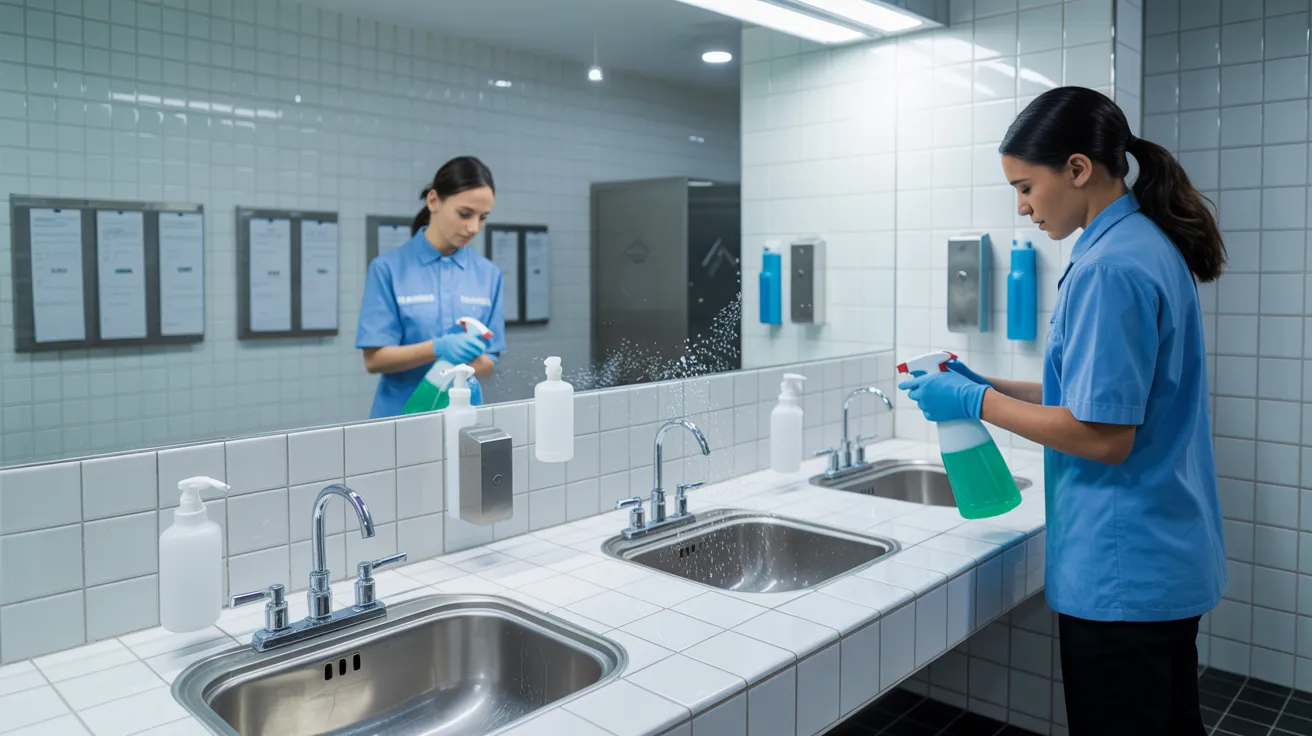
For restroom sanitation, cleaners disinfect high-touch surfaces, bathroom fixtures, stall dividers, supply dispensers, and trash receptacles, then refill items and eliminate smells. They also service restaurant moprooms, where chemical storage, sink hygiene, and drainage conditions can affect sanitation compliance and staff safety daily.
Food Safety Cleaning Significance for Brampton Businesses
Brampton businesses need to implement food-safe cleaning standards for meeting legal standards and passing inspections. You also minimize cross-contamination by cleaning and sanitizing food-contact surfaces, equipment, and high-touch areas correctly. Most importantly, you safeguard public health by lowering the risk of foodborne illness in your facility.
Sanitary Standards Adherence
Brampton food operations must comply with mandatory safety protocols, so sanitation practices is critical to adhering to health codes, ensuring the safety of customers, and avoiding penalties. You must maintain hygienic food handling zones, written maintenance records, proper chemical use, and auditable operational standards that align with municipal and provincial inspection expectations.
During inspections of your operation, inspectors determine if your cleaning program ensures protected inventory management, machinery hygiene, refuse management, and facility cleanliness.
Cross-Contamination Control
Meeting health code standards also depends on your ability to prevent cross-contamination during daily food handling and cleaning. You must separate raw ingredients from ready-to-eat foods, sanitize prep surfaces between tasks, and store chemicals away from food-contact items. Clear procedures reduce transfer risks and ensure ongoing adherence to health checks.
You should establish allergen separation to prevent major allergens from touching shared surfaces, containers, or equipment. Employ separate boards, labeled implements, and careful equipment identification so employees avoid combining products during preparation or service. Require handwashing after handling uncooked proteins, shellfish, egg items, or allergen products. Change cleaning rags frequently, and check disinfectant potency using test kits. When staff members receive training on these procedures every shift, you build a more hygienic, secure workplace that meets Brampton's food safety expectations consistently.
Community Health Safety
If proper sanitation declines, you don't merely face potential inspection issues—you amplify the risk of foodborne illness harming customers, staff, and the broader Brampton region. You also undermine your responsibility in safeguarding community wellness, especially in high-traffic food premises where pathogens travel quickly through surfaces, equipment, and touchpoints.
You must establish sanitation protocols that remove contaminants, disinfect correctly, and verify outcomes. This involves adhering to exposure times, utilizing approved disinfectants, logging schedules, and instructing staff to meet regulatory standards. These controls promote disease prevention by limiting pathogens before reaching food or hands. Across Brampton, strong cleaning protects at-risk populations, reduces disease potential, and demonstrates accountability. When you maintain proper protocols, you exceed regulations—you substantially lower hazards and facilitate secure food handling city-wide.
Why Is Cleaning Essential for Food Safety Compliance?
Adopting thorough cleaning protocols reinforces food safety compliance by reducing contamination risks, preventing pathogen multiplication, and ensuring your facility complies with sanitation requirements under HACCP-based programs and public health regulations. You confirm that food-contact surfaces stay visibly clean and microbiologically controlled, enabling documented preventive controls and inspection readiness.
Cleaning efforts additionally bolster allergen mitigation by clearing residues that can provoke undeclared allergen exposure.
Establishing When to Schedule Commercial Cleaning
maintenance activities.
facility shutdowns, weather-related soil accumulation, or pest-control management periods
How Do You Choose Brampton Cleaning Experts?
Evaluate providers first by sanitation compliance standards rather than cost. You must ensure each provider understands CFIA, public health, and HACCP-aligned expectations for your business. Request proof of insurance, WHMIS compliance, staff training documentation, and supervision methods. Check technician understanding of cross-contamination risks, chemical safety, and traceable sanitation records.
You must also evaluate operational reliability and oversight. Seek references from Brampton food companies, then assess response speed, corrective processes, and communication standards. Ensure the company enables supplier checks and can provide inspection-compliant records when authorities or third parties demand verification. Verify equipment care, color-coded items are deployed correctly, and operational-specific risks are understood. A reputable service protects compliance, product safety, and your market standing.
What's covered in a sanitation cleaning strategy?
Develop a written plan that clarifies every sanitation task, standard, and responsibility prior to production start. You should outline cleaning schedules, authorized chemicals, concentration levels, contact duration, implements, and validation techniques for each location, surface, and apparatus. Incorporate pre-operational inspections, corrective actions, and employee training requirements.
Your program should also address contamination prevention, garbage management, pest control procedures, and recorded timelines for restrooms, drains, floors, and food-contact areas. Detail how you'll separate raw and ready-to-eat processes, support ingredient tracking, and ensure accurate allergen labeling through validated cleaning between product changes. You should assign accountability, maintain signed records, and compare results against regulatory standards, HACCP controls, and customer requirements. When gaps appear, revise procedures immediately and re-educate staff.
Commonly Asked Inquiries
Will sanitation providers handle nighttime hours at Brampton facilities?
Yes, you can contract sanitation providers to handle overnight shifts in Brampton facilities. You'll arrange nighttime cleaning around production schedules, security controls, and personnel requirements. Providers generally establish nightshift logistics to minimize interruption, maintain standards, and log completed work. You should verify response times, oversight, lockout protocols, and disposal methods before service starts.
Do sanitation professionals provide hazard containment solutions?
Yes, you can locate Brampton sanitation experts providing spill response services. They manage contamination, evaluate risks, contain affected zones, and begin swift decontamination to minimize exposure and prevent business disruption. You should confirm timeframes, credentials, safety protocols, and waste procedures. If your facility must meet compliance standards, select a service that tracks incidents, adheres to standards, and supports verification.
Do environmentally safe disinfectants work safely on food-contact surfaces?
In essence, eco-friendly disinfectants are safe for surfaces contacting food provided you buy solutions certified for food use that comply with regulatory requirements. Check application timing, dilution ratios, and rinse protocols prior to application. Natural-based solutions lower harsh chemical exposure, although you require evidence of effectiveness against harmful bacteria. To keep residue free surfaces, refer to resource adhere to manufacturer directions precisely and confirm the disinfectant meets applicable food industry sanitation standards.
Will maintenance plans adjust for seasonal variations?
Yes, you can customize cleaning plans for production fluctuations. You should adapt timing, staff levels, disinfectants, and testing procedures to match seasonal workflows while maintaining regulatory requirements. You'll reduce operational delays by planning cleaning around production shifts, peak seasons, and equipment use patterns. You should further modify written procedures, training, and monitoring protocols to address periodic risks, new allergens, or increased soiling. Regular reviews preserve your schedule effective.
Are professional cleaning companies offering employee instruction on sanitation best practices?
Certainly, professional cleaning experts coach your staff on sanitation best practices. You secure employee development on proper chemical use, processing times, contamination control, machine disassembly, and documentation procedures. They typically align coaching with HACCP, GMP, and CFIA or local public health requirements. Many execute sanitation audits to verify compliance, uncover shortcomings, and reinforce corrective actions. This helps you maintain consistent procedures, satisfy audits, and minimize foodborne pathogen risks every day.
Conclusion
Partnering with Brampton commercial cleaning and food safety experts goes beyond tidying—it ensures your facility meets inspection standards and your protocols remain compliant. From kitchen areas to production zones, each cleaned area and organized section lessens contamination risk and prevents major expenses. By arranging service at suitable frequencies and implementing a thorough cleaning program, you shield your workforce, clients, and your reputation. In a tightly controlled market, sanitary conditions can't be overlooked—they're critical to business success.